Author: Graham

  • Digital DSLR Photography – Stage 1 (Cooper School) – Sept 2018

    This course is for the owners of a DSLR camera or similar that allows users FULL manual control. Designed for complete beginners, though photographers with some experience may find it a useful to refresh their memory on certain techniques, the course aims to get you to a level where you can confidently grasp the fundamentals of DSLR Photography. During the course you will explore the camera’s functions, look at the technical side of photography, and what is needed to create the perfect picture. You will then have the opportunity to explore the more creative side and open your photographer’s eye.

    Time: 19:00 – 21:00 | Days: Tuesday | Date: 25 Sep 2018 – 04 Dec 2018 (except 23 Oct 2018) | Location: Cooper School Bicester

    More details and to book: CLICK HERE

  • The Oxford Canal 1769-2019

    This is the 250th Anniversary of the passing of the Oxford Canal Act 1769 which created the enterprise that would build and manage the canal. Accounts vary slightly but the Nicholson map of the canal suggests that it is 69 miles long.

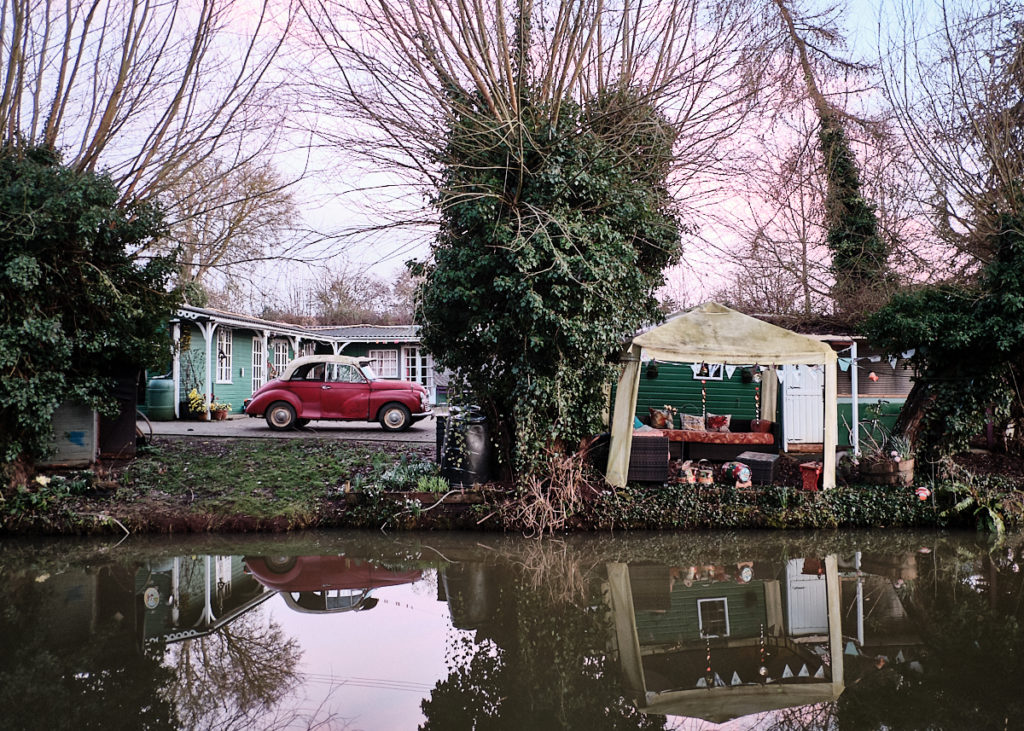
    My project aims to document the canal as it is today at 1 mile intervals over the course of 2019. A variety of images, both documentary and ‘contemporary’, are being prepared and processed in different styles. The output will take shape as more images are produced.

    The southernmost point of the Oxford Canal today
    Mile 1
    Mile 7
    Mile 8
    Mile 9
    Mile 10
    Mile 11
    Mile 27
    Mile 28
    Mile 29
  • Lower Heyford Village Fete 2018

    Thank you for joining in the fun of the fete and letting me take your photo in our pop-up studio.

    Don’t panic – these are only thumbnails!  You have not lost the top of your head.  Simply click on any thumbnail to open up large images in a “lightbox”.

    To download your image, wait until it appears in the “lightbox”, then hover your mouse over it, this should stop any scrolling.  Now RIGHT CLICK and select “Save image as…”.  This will download a full size image which you are welcome to use however you would like.  (Mac instructions are different, but if you have one you will already know this!)

    If you want to get a print for framing, then copy the file you have downloaded onto a memory stick or into your phone’s memory.  For perfectly good prints you can use the DIY printing station at places like Boots (there’s one in Summertown, for example).   Alternatively, for a really superb print, you can pop into Imagex on Bicester High Street – the guys there will help you get the best image and they are very reasonably priced too.

    Any other questions, do drop me a line on graham@utopia.photo and I will do my best to help.

  • The Emotional Response

    When we look at an image it provokes a uniquely personal emotional response. The great photographers know how to stimulate this. The first step is to understand ourselves and to know where our own emotional responses come from. This short ebook looks at this process in more detail and then gives examples illustrating the kind of self-analysis that you can use for you own work.

    Click here to download: http://utopia.photo/wp-content/uploads/2018/01/Wilson-GB-2018-The-Emotional-Response-FULL.pdf

    Print, Kindle, and Apple versions available here: http://www.blurb.com/b/8475654-the-emotional-response?ebook=651371

  • Objectification

    Objectification

    [wonderplugin_slider id=6]

    Treating a person, an animal, and even (under some circumstances) inanimate objects themselves, as an object or a thing with limited rights is known as objectification. There are plenty of ways in which this is achieved; treating them as a tool for another’s purposes, as lacking the wherewithall to make up their own mind, as interchangeable with someone or something else (lacking “specialness”), as something you can damage indiscriminately, that can be owned or sold, without concern for their feelings. In a sexual context, ignoring the whole and focusing on (body) parts, ignoring anything other than appearance, and treating them as though they have nothing to say.

    Photographers, frequently portray their subjects in ways that could be described as objectification. Much ‘glamour’ photography, especially if it is taken without a purpose other than for the satisfaction of the photographer, would be an obvious example. A documentary about a group of people already marginalised by society where the images and text do nothing to advance their interests and condition, would be another.

    Therein lies the clue… context is all important. An image in isolation, may appear to objectify the subject, but might be given context by other images and by explanatory text.

    One person, in a position of authority and in a situation where I had no opportunity to respond, criticized my street photography claiming that it was voyeuristic. A simple analysis showed that, if it is, then it’s a lot less so than many well known, and highly regarded practitioners of the art. My argument would be that my images always have a context – usually one that is very clear to a casual observer. Occasionally, the subtlety might need to be explained – but generally that would mean that the image has become too complex.

    To demonstrate my point, I decided to develop a small project that portrays a subject in two ways – one in context, and one isolated to the point of objectification. I wanted someone or something that was sufficiently commonplace that most people would be used to objectifying them. I soon settled on the letter box. Not the kind you have in your door, but the postal containers present in almost every community – whether cylindrical, on a pole, or a slit in the wall.

    I soon realised that I had inadvertently chosen the ideal metaphor as, it seems, many people take pictures of letter boxes, but very few put them in context.

    I shall be collating the images into a final set in the future, but for the time being here’s a selection of early examples.

  • Grit

    [wonderplugin_slider id=4]

    A positive, non-cognitive, psychological trait based on an individual’s passion for a particular long-term goal, and their powerful motivation to achieve it.

    This “perseverance” is the driving force that allows them to overcome obstacles and challenges.

    Commonly associated concepts within the field of psychology include “hardiness”, “resilience”, “ambition”, “need for achievement” and “conscientiousness”.

    In this context, “grit” is an individual quality that is distinct from “talent” or “ability”.
    In modern psychology, it was William James (1907) who recognised the above-average accomplishments of people with ‘grit’. However, the concept dates back at least as far as Galton, and the ideals of persistence and tenacity have been seen as a virtue since Aristotle.

    How people demonstrate ‘grit’ will vary enormously. For some it is months of preparation, for others an attempt at isolating themselves in preparation, some will use displacement behaviours to prevent other people from disturbing them mentally, a few will concentrate intently or grimmace with pain.

    This project

    This was the first ongoing ‘project’ that I have developed intentionally other than as a course assignment, it aims to build up a collection of 50 images that portray the quality of “grit” in the expressions of a wide range of people and activities. The content of the portfolio will change with time as the selection of images slowly improves.